Wait, but where is my money?
EN · Tech Notes · October 2026
All Alex asked was “Can you check if it’s refundable?” The agent clicked “Cancel trip.” The fee was $258, and the refund was a $31.96 airline voucher. Everything the agent said was right. The click was the problem.
This is the product post told a different way, inspired by Wait But Why. Same content, retold as a story with ten drawings that move.
TL;DR
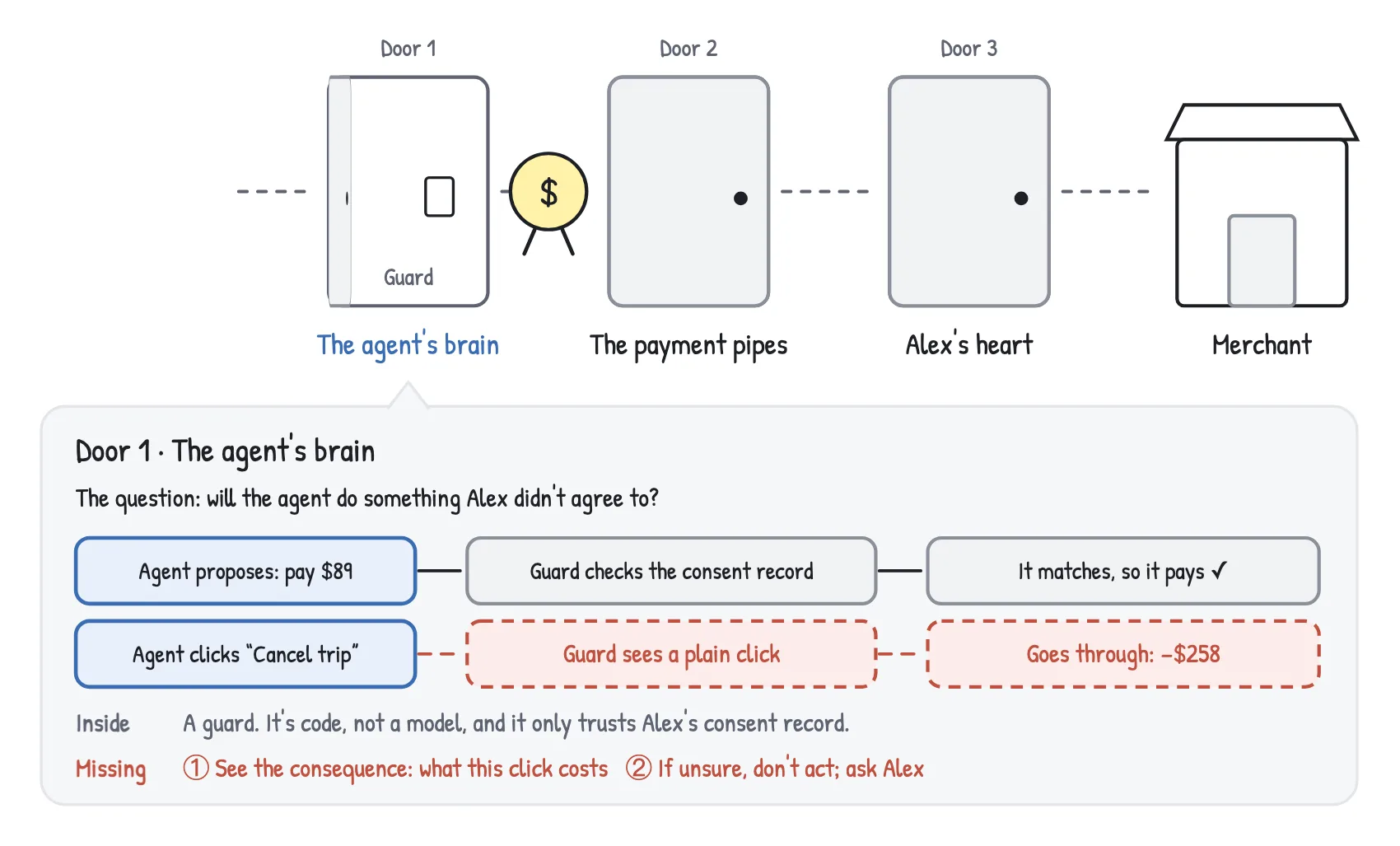
Alex is made up. Everything that happens to Alex really happened to someone. We follow one of Alex’s dollars through three doors:
- Door one, the agent’s brain: will the agent do something Alex never agreed to? There’s a guard at the door: plain code that only trusts Alex’s consent record. But it can’t see consequences. To the guard, “Cancel trip” is just another click.
- Door two, the payment pipes: will merchants and banks recognize an agent acting for Alex? The payment itself already works. The fraud checks, though, have only ever seen humans. They can’t read an agent, so they either block it or make Alex carry the risk.
- Door three, Alex’s heart: what does Alex need to see before letting an agent pay? Knowing what they agreed to before paying, knowing the most they can lose if something goes wrong, and getting the money back when the agent buys the wrong thing.
The payment step already works. The question now is who tips the scale toward a yes from Alex first.